Art Class Elements Schedule
Week 1 - Shape
Week 2 - Line and Shape
Week 3 - Texture
Week 4 - Value
Week 5 - Form
Week 6 - Form using Value
Week 7 - Local Value
Week 8 - Contrast
Week 9 - The Shapes of Natural Forms
Week 10 - Edges
(Looks like this movie is no longer available, sorry!)
This week we looked at the art of George Caitlin. We added this print to the art portfolios. Here is a bit of history behind it.
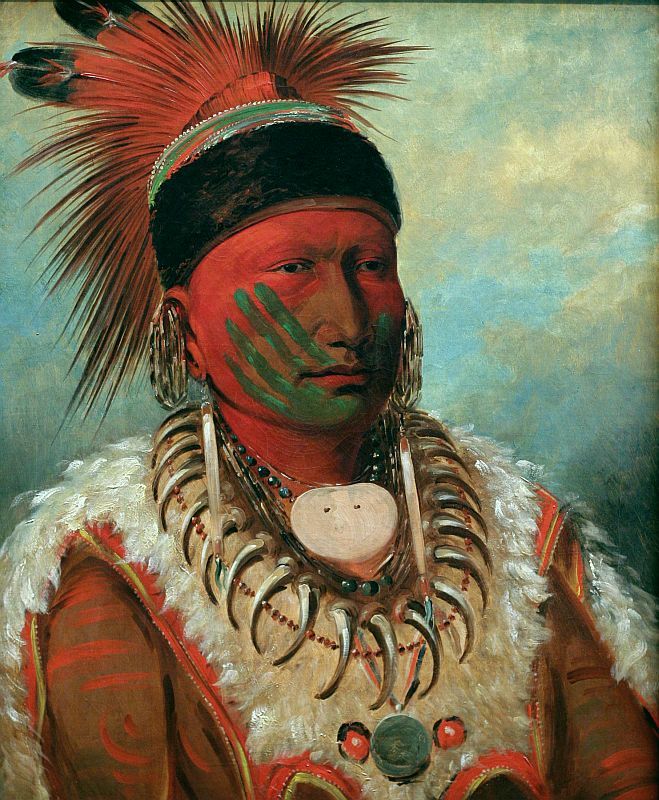
George Caitlin, The White Cloud, Head Chief of the Iowas (1844/1845)
Mew-hu-she-kaw, known both as White Cloud and No Heart-of-Fear, was one of several tribal chiefs of the Iowa people in the mid-nineteenth century. His father, also named White Cloud, had been a tribal chief before him. By the time this portrait of the younger White Cloud was painted in 1844/1845, the Iowa population had dwindled from fourteen hundred to about 470 people. Treaties, some signed by the senior White Cloud, and laws passed to promote America’s westward expansion had forced the Iowa people from their traditional territories on the plains of eastern Iowa to a small reservation in southeast Nebraska. Missionaries tried to convert the Iowas to Christianity and teach them farming, contrary to the tribe’s traditional beliefs and customs. Deprived of their hunting lands and related livelihood, the Iowas became increasingly impoverished.
At this time of great crisis, White Cloud decided to raise money for the tribe by taking a small group of his people to London around 1844-1845. There the American artist George Catlin had opened an exhibition of his large collection of paintings and artifacts representing American Indians. A decade earlier, Catlin had traveled across the American West, recording images of American Indian life and customs. In Iowa territory, he visited with White Cloud’s father. Knowing Catlin’s sympathy for American Indian life and ways, the younger White Cloud hoped that he could raise money by performing within Catlin’s exhibition. White Cloud and thirteen other Iowas wore their native costumes and performed tribal dances at Catlin’s gallery and met with British dignitaries while touring London.
This portrait reflects White Cloud’s stature within the Iowa tribe and his brave nature. He wears a white wolf skin over the shoulders of his deerskin shirt, strands of beads and carved conch shell tubes in his multipierced ears, and a headdress of deer’s tail (dyed vermillion red) and eagle’s quills above a fur (possibly otter) turban. His face is painted red and marked with green handprints. The Iowas’ traditional dress for men included such adornments. The bear-claw necklace White Cloud wears may testify to his skill as a hunter; it was reserved for those who earned success as hunters or warriors. Look closely at White Cloud’s expression. Perhaps his resolute gaze is the most direct clue to his bravery. For he crossed the Atlantic to save his tribal culture even after Iowa land and livelihood had been deeply eroded by the politics of expansionism.
___________________________________________

This weeks project we focused on the element "Line" and did this project.
|
To get the full project directions, go to Line Art
I would encourage you to have your children try the project at home again this week. I would love to have them share it with the class next week.

No comments:
Post a Comment